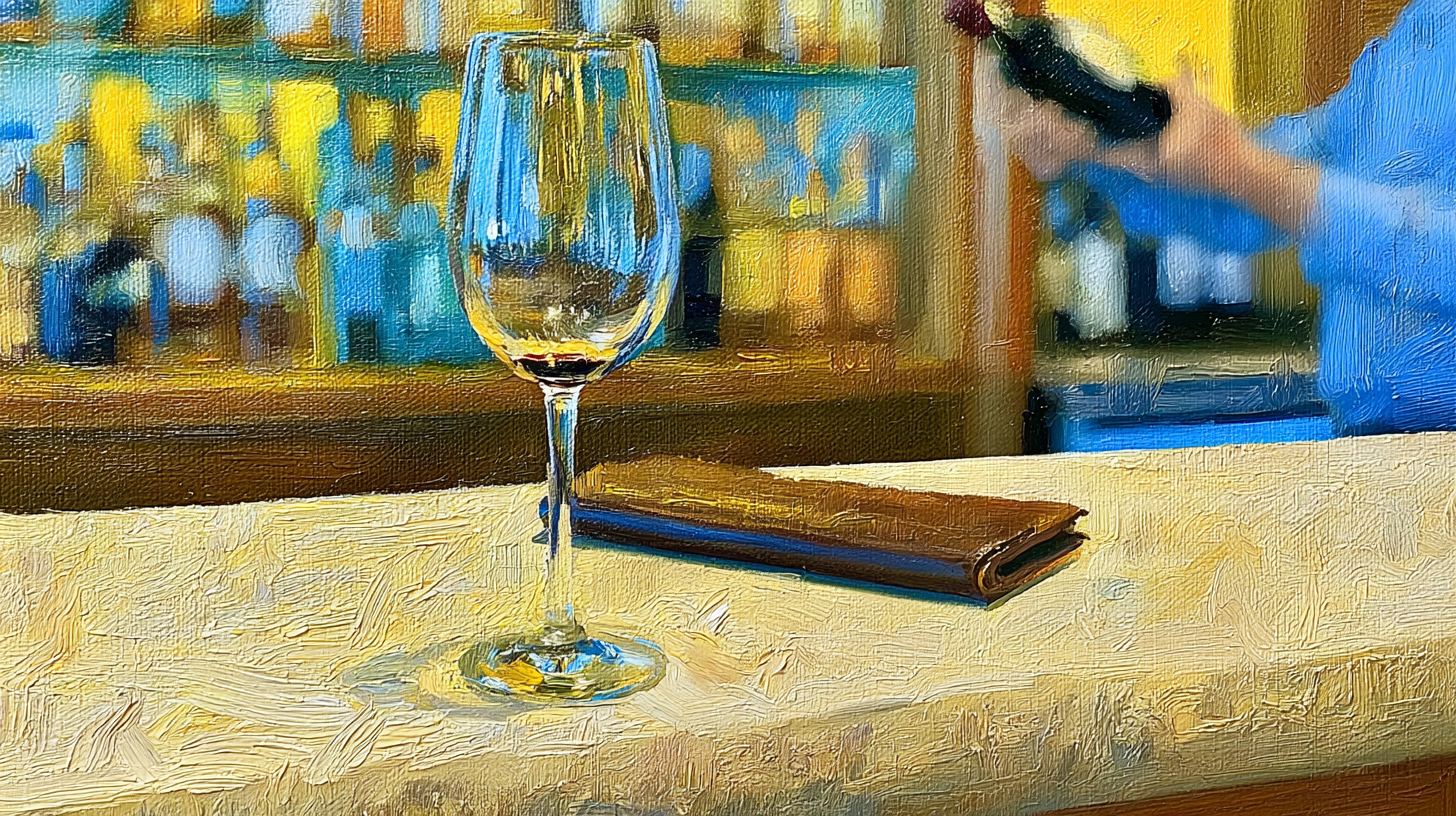

One glass of red wine usually leaves my night and my next day alone. The hour after it is the problem.
The pull toward a second drink shows up right around the time the first one is gone, and it runs on a clock. In lab studies, the urge for more alcohol after a single drink climbs through the first hour and then fades. If you're drinking less, that hour is where your plan either holds or doesn't.
I know because I lived it on Friday night.
What happened on Friday
I give myself five drinks a month. I've been logging every one of them in the Temperates App for long enough to see my own patterns, and one of them is clear: a single glass of red wine usually doesn't cost me anything I'll feel that night or the next day. My sleep holds. The morning feels normal. No headache. It's still alcohol, and it still goes on the long-haul tab I wrote about in I Changed My Drinking in 2022. Did It Lower My Cancer Risk?, but within my five a month, one glass of red is a drink I can have.
So on Friday I had one. A full-bodied red at a bar, and it was great. I enjoyed the nose. I enjoyed the glass in my hand. I enjoyed the first few sips the way you enjoy something you've loved for thirty years.
Then it was gone, and I wanted another one. Not vaguely. Specifically, and right away.
I still had one drink left in my monthly budget, so this wasn't about rules. It was about what I know happens when I have two. Two glasses of red and my sleep breaks up. Two glasses and the next morning is foggy, and sometimes the headache doesn't even wait for morning. It starts within a few hours, while the night is still going. One usually stays out of my way. Two sends a bill, sometimes before I'm home.
The hard part was shorter than I expected. The strongest pull sat in the gap between finishing the wine and deciding what came next. Once I ordered an Athletic, something shifted. I'd made the call, and the wanting turned into something closer to acceptance. By the time I finished the Athletic, I was over it. I kept my last drink in the kitty.
What struck me wasn't that I wanted a second glass. It's that I could feel the whole thing happen, start to finish, like watching a wave come in and go back out.
Why does the second drink feel so good to want?
I've written before about what you're hiring the drink to do. When I have one of my five, I'm not trying to change my mood. I'm hiring the drink to make an experience better. The smell of a good red. The weight of a martini glass. Craft beer, which is an art form with more styles than I could ever get through, which is why I love a beer flight: it's interesting, it's creative, and the beers are usually delicious. Red wine, craft beer, martinis and bourbon are the four I still love, and I spend almost every one of my five drinks on them.
Most of what I want when I want a second glass is more of all that. More taste, more ritual, more of the moment.
But I'm not the only one at the table. Alcohol is also a drug, and the drug has its own opinion about a second round.
What the science says about the first hour
Researchers have known for decades that alcohol hits in two phases. While blood alcohol is rising, the effects are mostly stimulant: the lift, the ease, the warmth that makes a room feel friendlier. As it falls, the effects turn sedative. The scale researchers use to measure this is literally called the Biphasic Alcohol Effects Scale, and a 2009 study describes the rising side as producing the pleasurable effects and the falling side as largely unpleasant.
That first lift doesn't last long. Blood alcohol from one drink peaks and then starts dropping, and the good part goes with it. Your brain notices.
Then there's what researchers call the priming effect. In 2022, a team of researchers in Liverpool, England, pooled 38 studies and found that a single dose of alcohol reliably increases craving and the amount people go on to drink. The timing is the part that matched my Friday night. Craving rose through 30 and 60 minutes after the priming drink, then dropped off at 120 minutes and beyond. The urge for a second drink is built into the first one, and it has a shape.
In the book I called this "calm first, then rebound." The first drink presses the brain's brake pedal. The brain pushes back. That push is what a second drink promises to quiet, and it's why the second one so often feels more necessary than the first.
Why does this matter if you're drinking less?
Because nobody's plan fails at the first drink. It fails at the refill.
You decide on one. You have one. Then the pull arrives, and it arrives dressed as a good idea: the glass is still in your hand, the night is still going, the taste is still on your tongue, and the drug in your system is quietly lobbying for round two. If you've spent decades saying yes at that moment, your body expects a yes.
On top of all this, you are asked if you want a second round almost every time. Which forces you to make a decision right when you're in that window of your body and brain wanting the second drink.
The social setup doesn't help. I was trained as a waitress to put down a second round before anyone asked. At weddings and events, servers walk the room topping off glasses. Everyone around you has a refill. The default in almost every room is a second drink.
I watched this happen to me on vacation in July. I drank a few days in a row, and the pull turned on fast. I told my husband, "I feel that pull. I want a drink." Cutting back hadn't erased decades of conditioning. It was still there, and drinking repeatedly at all was enough to wake it up.
What I do about it
Go in aware, hear the pull, and don't let it run your decisions.
I had already decided I was having one glass before I walked into that bar. The decision wasn't the problem. The problem was that the first drink did its thing in me, and then I was standing inside the pull with the decision already made and the wanting arguing against it. That's the whole point of this piece. You can't decide your way out of the pull ahead of time. You can only know it's coming and refuse to let it order.
A few things that work for me:
Know your window. The research says the urge climbs through the first hour. For me, the worst of it was the stretch between the empty wine glass and ordering the Athletic. Yours may be different. Log it. The Temperates App lets you log what you had and then log how you feel the next day, and after enough entries, the pattern is obvious.
Put a zero-proof drink in your hand. The hand wants something in it, the mouth wants a taste, and a good NA beer satisfies both while the rest of the urge runs out.
Know which drinks you feel tomorrow and which you don't. None of them are free. Every drink adds to the long-term risk, which is why there's a budget at all. But the difference between one red and two is my own data, not a rule somebody gave me, and it's what made Friday's decision clear.
Have the answer ready before they ask about the next round. You walked in knowing what you wanted the night to be. When the question lands inside the window, you're still the one deciding, right then, in the now. Just don't let the pull be the one who answers. Or if you do, be ready to accept the consequences.
I had my one glass on Friday. I enjoyed it. And then I enjoyed the part most people never notice: I felt the wanting show up, acknowledged it, didn't let it order, and replaced the drink with the next best thing for me.
Temperates Takeaway
The second drink is where drinking less gets hard, and it's hard for a reason. The lift from the first drink fades fast, the urge for more rises through the first hour, and the room is usually built to refill your glass right then. Treat that hour as the thing you're managing. Have a zero-proof option ready, know which drinks cost you a good night and which usually don't, and let the pull pass.
Want to see your own patterns? Log a drink in the Temperates App, and if you're curious what's driving the wanting, take the quiz: Are You Secretly a Temperate?
More on the moments that nudge the order: The NA Beer Was Right There. I Ordered Two Blue Moons. and The Harmless Drink Is a Myth You Tell Yourself.
Sources and reporting notes (4)ShowHide
Halsall, L., Jones, A., Roberts, C., Knibb, G., & Rose, A. K. (2022). The impact of alcohol priming on craving and motivation to drink: a meta-analysis. Addiction, 117(12), 2986-3003.
Martin, C. S., Earleywine, M., Musty, R. E., Perrine, M. W., & Swift, R. M. (1993). Development and validation of the Biphasic Alcohol Effects Scale. Alcoholism: Clinical and Experimental Research, 17(1), 140-146.
Ray, L. A., MacKillop, J., Leventhal, A., & Hutchison, K. E. (2009). Catching the alcohol buzz: An examination of the latent factor structure of subjective intoxication. Alcoholism: Clinical and Experimental Research, 33(12), 2154-2161.
Oporto, T. (2026). Temperates: The New Culture of Drinking Less, chapter 6, "The Science of Less," p. 50. Enchantra Publishing.
The author's account of her own drink log in the Temperates App. Her monthly budget is five drinks.