Two cans cost me almost three drinks. The more interesting question is why I didn't reach for the Athletic.
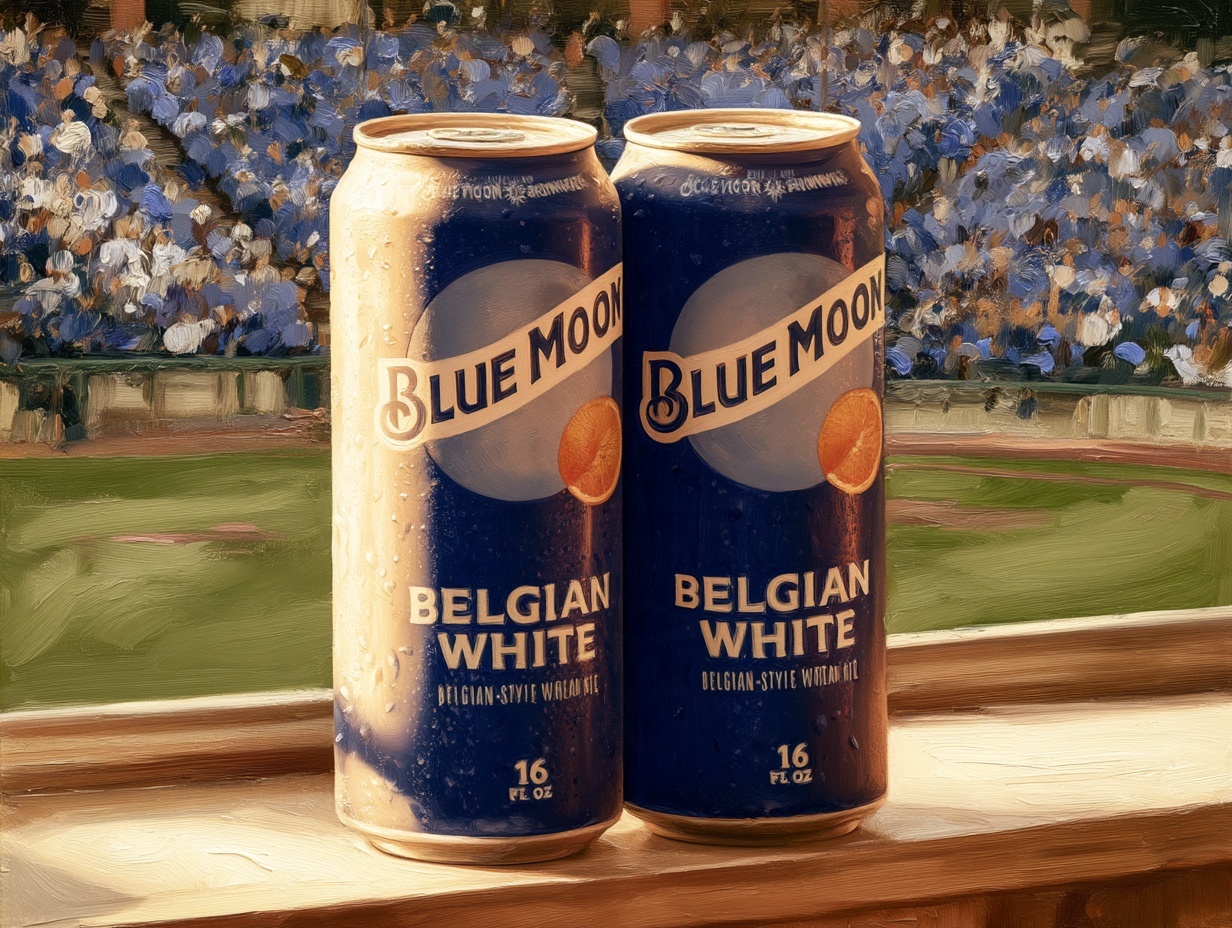
I had two Blue Moons at the Giants game. Sixteen-ounce cans. I enjoyed both of them, and I'm not writing this to beat myself up.
When I logged them, I put in two. Then I had to come clean with my own app. Those weren't two drinks. They were almost three, and the five drinks I give myself each month were more than half gone after one game.
Two cans, almost three drinks
Here's the math almost nobody does, anywhere. At a football game, I'm probably the only one doing it.
In the U.S., a standard drink is 14 grams of pure alcohol, about 0.6 fluid ounces. That's what's in a 12-ounce beer at around 5% alcohol. The trouble is that stadium beer rarely comes in 12 ounces, and plenty of it isn't 5%.
Blue Moon Belgian White is 5.4% ABV. A 16-ounce can holds about 0.86 ounces of pure alcohol. Divide that by 0.6 and each can comes out to about 1.44 standard drinks. Two of them: 2.88.
| What I could have had | Ounces | ABV | Standard drinks |
|---|---|---|---|
| 12 oz beer | 12 | 5% | 1.0 |
| One 16 oz Blue Moon | 16 | 5.4% | 1.44 |
| Two 16 oz Blue Moons | 32 | 5.4% | 2.88 |
Counting cans, I logged two. My body got almost three.
This is where drinking less trips people up. You make a plan, you count, you feel good about the count, and the count is off because the can got bigger and the beer got a little stronger. Neither change looks like much on its own. Together they add almost a full drink.
So I changed how the app counts
When you're tracking, you have to account for ounces and ABV, not just the number of drinks. I'd been shortchanging my own count without realizing it, and I don't want to do long division at a football game. So I changed how the Temperates App counts. Now you search for what you're drinking by name, and the app fills in the label ABV from a hand-picked list of popular beers, wines, seltzers and spirits. Pick the size you had, and it shows you two numbers: how many drinks you had, and how many standard drinks they add up to. If your drink isn't on the list, you pick the type and enter the ABV from the label yourself.
The part I can't stop thinking about
The math wasn't what stuck with me, though. What stuck with me is that the NA beer was right there, and I didn't order it.
Athletic is at MetLife now. It's an official partner. I wrote about the rollout in August in Athletic Brewing Scored Big at MetLife. Then I Tried to Find the Beer., including how hard it was to find on the concourse. But it's there. And I drink Athletic at home every day.
For years, NA beer was part of how I did Giants games. Now that it's easier to get than it's ever been, I stopped ordering it.
Before the partnership, the Coaches Club didn't carry non-alcoholic beer. I had to ask for it. Then I had to negotiate for it. Eventually the bartenders kept a stash just for me, behind the bar, not on a menu, not offered to anyone else. Getting one felt like a small win every game.
Now Athletic has the partnership, the branding, the pylon outside the stadium. You'd think I'd be thrilled. I've spent years pushing for NA beer at that stadium. Instead, I ordered Blue Moon.
I've been trying to figure out why. I have four theories.
1. It stopped being special
At the game, NA beer used to be the thing I had to work for. Now it's the same can I have in my own kitchen. Psychologists call this hedonic adaptation: the more often you have something, the less you enjoy it. Research on consumption has found that repetition dulls pleasure, and that breaks from a pleasant experience can bring some of it back. A beer I have every day at home was never going to feel like a treat at the stadium.
2. I earned it before, and now I don't have to
People value what they work to get. In a classic 1959 study, Elliot Aronson and Judson Mills found that people who went through a tougher initiation to join a group liked the group more than people who got in easily. My NA beer at MetLife came with an initiation. I asked, I pushed, I negotiated. The effort was part of the flavor.
Scarcity works the same way. In a well-known 1975 experiment, people rated cookies from a jar holding two as more desirable than identical cookies from a jar holding ten. My stash behind the bar was the two-cookie jar. A partnership with signage all over the building is the ten-cookie jar.
3. It stopped being mine
The stash wasn't just a beer. It came with a relationship I'd built with the bartenders over several years. They knew me, they knew what I drank, and they had it waiting. Psychologist Marilynn Brewer's optimal distinctiveness theory holds that people want to belong and also want to stand apart. The stash gave me both. Once the drink was promoted to everyone, the part that was just between me and the people behind the bar went away. Economist Harvey Leibenstein even named the pattern of losing interest in something as it gets popular: the snob effect. I don't love the word, but I recognize the feeling.
4. The Partake thing still stings
I spent years asking for Partake at MetLife. I was told it had to come through the stadium's distributors and that anything new needed corporate approval. Then the stadium signed a multi-year deal with a different NA brand. That told me what I'd suspected all along: the objection could be overcome. It just wasn't overcome for the brand I was pushing. I don't work for Partake, so I let it go. But something about it bothered me, and I'd be lying if I said that feeling never followed me to the bar.
So which was it?
I don't know. Maybe all four. What I notice is that most of what made the NA beer special at the game had little to do with the beer.
That's what I want anyone drinking less to take from this. If your NA drink works because of the ritual, the relationship or the small victory around it, pay attention when that changes. The drink might still be there. The reason you picked it might not be.
Temperates Takeaway
Count alcohol, not cans. A 16-ounce beer at 5.4% is about 1.44 standard drinks, so two of them is almost three. If you're tracking, the Temperates App does that math for you: search your drink, pick the size, and it counts standard drinks from the label ABV. And notice what your NA drink is doing for you besides the taste. When the setting changes, your choice can change with it, so plan for that before you get to the bar. Curious what's behind your own drinking patterns? Take the quiz: Are You Secretly a Temperate?
More on the moments that nudge the order: The Poison Is the Experience and The Super Bowl's Smartest Drinker Ordered Zero.
Sources and reporting notes (7)ShowHide
National Institute on Alcohol Abuse and Alcoholism, "What Is a Standard Drink?" (U.S. National Institutes of Health).
Blue Moon Brewing Company, Blue Moon Belgian White product information (5.4% ABV).
Nelson, L. D., & Meyvis, T. (2008). Interrupted consumption: Disrupting adaptation to hedonic experiences. Journal of Marketing Research, 45(6), 654-664.
Aronson, E., & Mills, J. (1959). The effect of severity of initiation on liking for a group. Journal of Abnormal and Social Psychology, 59(2), 177-181.
Worchel, S., Lee, J., & Adewole, A. (1975). Effects of supply and demand on ratings of object value. Journal of Personality and Social Psychology, 32(5), 906-914.
Brewer, M. B. (1991). The social self: On being the same and different at the same time. Personality and Social Psychology Bulletin, 17(5), 475-482.
Leibenstein, H. (1950). Bandwagon, snob, and Veblen effects in the theory of consumers' demand. Quarterly Journal of Economics, 64(2), 183-207.
Standard-drink calculations are the author's, using the NIAAA definition. Personal account of the author's experience at MetLife Stadium.