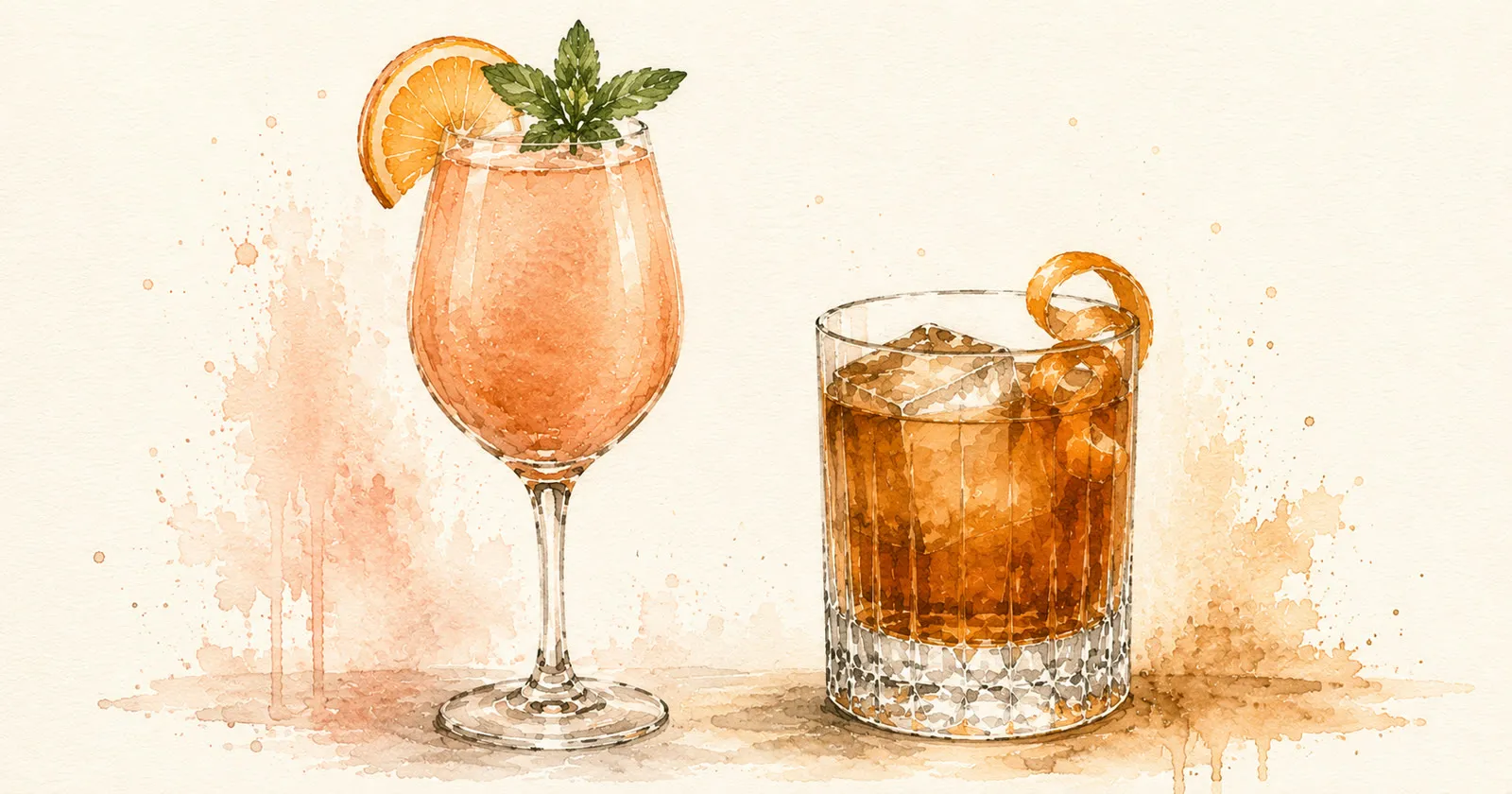

One drink is not free. At my brother's wedding, one old fashioned I didn't finish gave me reflux and 3:30 a.m. nausea, while a double vodka martini this year did nothing. Dark spirits carry more congeners than vodka, so the easy cocktail can cost more than the stiff one. "It was probably something else" is the myth protecting itself.
You know the drink. The one you have because it's a wedding, a birthday, a Tuesday that's been a long week. One drink. Practically nothing. Definitely not enough to matter.
The "practically nothing" belief is doing more work than you think. And it falls apart the moment you check it.
One drink I didn't even finish
My brother got married this past weekend. I mostly don't drink anymore, but I keep a little room for an occasional exception, and the groom's signature cocktail, an old fashioned, was a clear place to spend one.
The old fashioned made me sick. Reflux the moment I lay down. Nausea at 3:30 a.m. that had me seriously weighing the bathroom floor. From one drink I didn't even finish.
Here's the part that should interest you more than my bad night: it was the only drink all year that did this to me. A double vodka martini, a glass of red wine, a Corona, a few sips at a wine tasting. None of them, including the one with more alcohol than the old fashioned, caused so much as a flicker. So "you lost your tolerance" doesn't explain it.
Does every drink cost your body the same?
Most people never learn this, because they never run the experiment: the price of a drink has little to do with how strong it feels.
Alcohol itself is a well-known reflux trigger, which is why lying down after any drink can bring on heartburn. But an old fashioned adds something a vodka martini doesn't: a dark, barrel-aged spirit. Dark spirits like bourbon carry more congeners, byproducts of fermentation and aging, and federal health officials say those can make you feel worse the next day, separate from the alcohol itself. Vodka has very few.
So the "harmless" model has it backwards. The easy-drinking cocktail that barely registers as a real drink can cost you more than the stiff one you respect. You're pricing drinks by how strong they feel. Your body is pricing them by what's in the glass.
"But it was probably something else"
Maybe. Long day, late food, four hours on my feet, and, fair, I was wearing a shaper that squeezes everything north of the stomach, which doesn't help reflux either. I'm not a doctor, and I can't run a controlled trial at my brother's wedding.
But notice the instinct. The second a drink causes a problem, we reach for any other explanation.
The food. The stress. The hours. Anything else that made you consider the bathroom floor at 3:30 a.m., you'd simply stop using. With a drink, we go looking for an alibi.
The alibi reflex is the harmless-drink myth defending itself.
Why this matters if you drink "normally"
The lesson isn't for people who quit. It's most relevant if you still drink occasionally and feel fine about it. "I only have one or two" quietly assumes those drinks are free. They aren't. The costs are just small enough to blame on something else, and over years, they add up in ways that matter.
Temperates Takeaway
You don't have to quit, and you don't have to turn one drink into a referendum. Just stop treating it as free. Notice what's in the glass, and notice how your own body answers, instead of deciding in advance that it won't.
A harmless drink isn't a fact. It's a story we tell so we don't have to choose.
I take apart one of these every Sunday. The signup is right below.
Sources and reporting notes (2)ShowHide
- National Institute of Diabetes and Digestive and Kidney Diseases. Eating, Diet, and Nutrition for GER and GERD.
- National Institute on Alcohol Abuse and Alcoholism. Hangovers.