
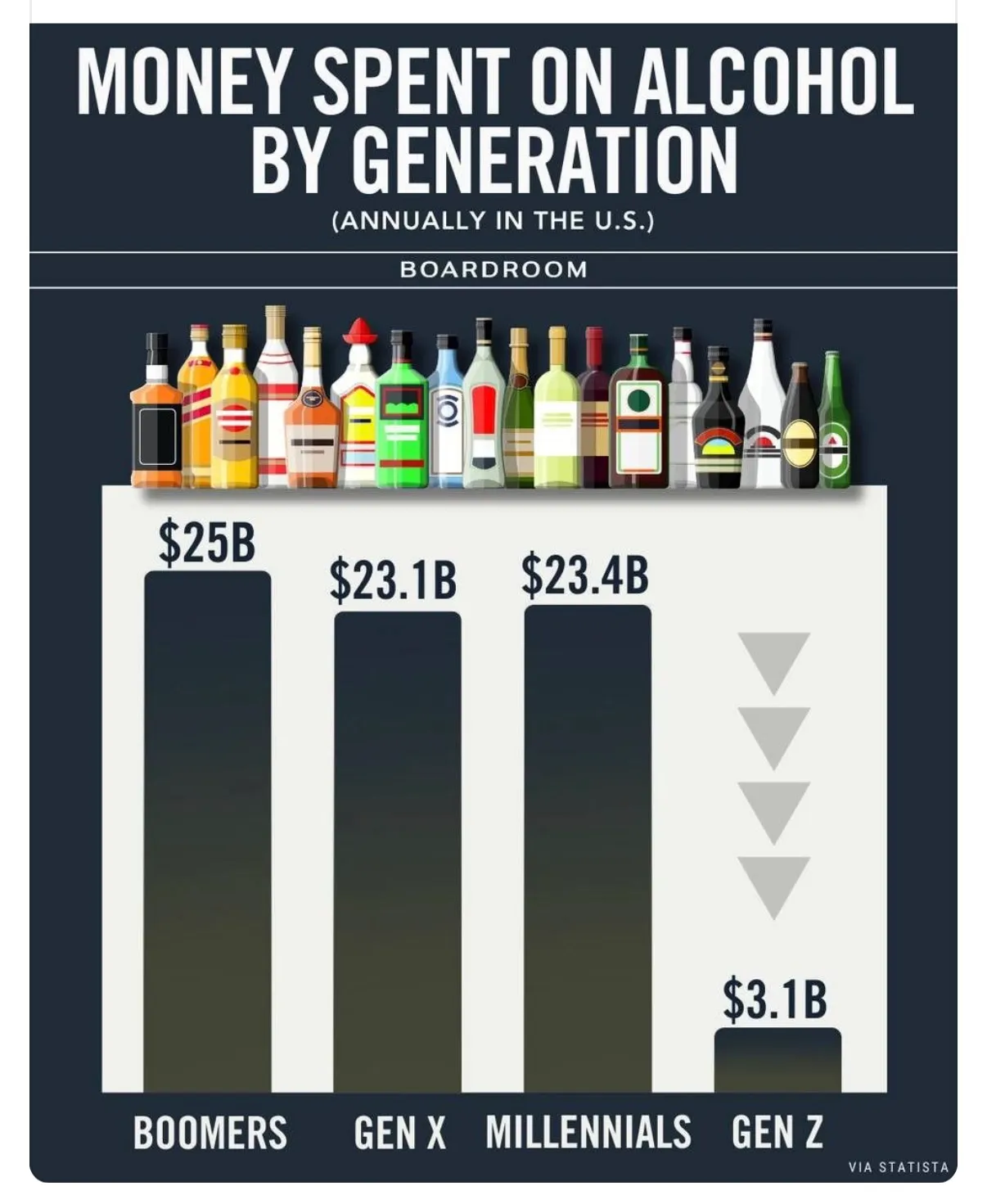
Scroll any thread about Gen Z and alcohol and you'll get the same two explanations:
It's too expensive.
They're just smoking weed instead.
That's the Gen Z version of the story, and it's not wrong. It's just not complete.
Across nearly 5 million views and over 10,000 comments on our own thread, those reasons showed up again and again, partly because they're easy to say out loud. The bigger story is what's happening underneath: across generations, alcohol isn't delivering what it used to. Not morally. Practically.
Here are eight reasons more people are stepping back, even when they don't call it "quitting."
1. The Tradeoff Feels Worse Than It Used To
Alcohol used to buy relief. Now it often buys anxiety, bad sleep, and a lingering sense of depletion.
People are noticing how often alcohol is expected, explained, defended, and defaulted to. And once you notice pressure, you can't unsee it.
 Temperates
When the cost starts showing up the next morning, mentally, emotionally, socially, people begin to hesitate. Not out of discipline, but out of math.
2. Socializing No Longer Requires It
Group chats replaced bars. Hanging out doesn't need lubrication when the connection already exists.
Alcohol worked best when silence needed filling. That silence isn't there anymore.
3. Being "Out of It" Isn't Neutral Anymore
In a documented, screenshot-ready world, losing control feels riskier.
Alcohol used to come with a story: celebration, romance, rebellion, sophistication. That story frayed.
TemperatesIt's not about fear. It's about awareness.
When everything can be replayed, not everyone wants to perform looseness on demand.
4. Drinking Doesn't Signal Status Like It Once Did
Wine culture, cocktail culture, hustle-with-a-hangover culture, these were once aspirational.
Now they often read as performative or dated.
What signals status today is clarity, autonomy, and not needing a crutch to be interesting.
5. The Body Pushes Back Faster
Poor sleep, inflammation, anxiety, brain fog, the feedback loop is shorter now.
People don't need a rock bottom. They just need enough mornings that feel off.
6. Weed Is Mentioned Because It's Safer to Say
When alcohol is questioned, people rush to explain it away.
It's just weed. It's just money.
Those are cover stories. They let people avoid saying the harder thing: "This doesn't feel worth it anymore."
7. Drinking Lost Its Narrative
Alcohol used to come with a story: celebration, romance, rebellion, sophistication.
That story frayed.
What's left is logistics, when, how much, how to recover, and logistics don't inspire loyalty.
8. People Are Noticing the Pressure
The biggest shift isn't consumption. It's awareness.
People are noticing how often alcohol is expected, explained, defended, and defaulted to. And once you notice pressure, you can't unsee it.
That's the moment everything changes.
Is this about quitting?
This isn't abstinence. It isn't moralizing. It isn't a trend.
It's what happens when a default stops feeling neutral.
Temperates Takeaway
Temperates exists for people in that in-between space, not quitting, not autopilot, just noticing, and realizing that noticing is enough to begin.